

Birth Planning Guide
Every mama's vision of the perfect birth is unique. Locations may be different, support persons may be different, and there are a wide range of decisions to consider. I think one of the things that's so overwhelming about planning your birth is the sheer amount of information you could research, and you may not know where to start, or what the pros and cons of some of these birth choices are. As a doula, my algorithms are full of helpful podcasts, educational websites, and insightful guides. This is a collection of some of my favorites that I've found myself recommending repeatedly and receiving positive feedback on. As you explore your options and consider things you may be interested in, I encourage you to get out a piece of paper or make a note in your phone. Write down things you want to research on a deeper level, and think about why options do or don't vibe with you.
Home Birth
Pros:
- Most intimate birth team, you will likely have met the midwife many times and be more familiar with the assistants who will support her
- Most respect for birth plan/wishes
- Transparency in pricing
- Recover in your own bed
- Less disruptions in immediate postpartum period
- Generally the fewest number of additional people in the room (midwives and assistants)
- Comfort and familiarity with location
- Very quiet and the most private
- Often less expensive than birth centers and hospitals, depending on your midwife's rates
- Least interventions
- Highest rates of vaginal birth
- Highly encouraged to eat in labor
- No disruption to spontaneous labor progression
Cons:
- No access to epidurals, pain relief options may be limited
- Might be a greater distance from your provider
- Midwife may need to call in a surgeon to suture significant tears
- Not all insurances cover home births attended by midwives
- Might have significant delay to timely emergency care
- Concern for high risk pregnancies, could "risk out of care"
Birth Center
Pros:
- Intimate birth team, possibly 1-2 midwives/assistants on premises you haven't met before
- Most respect for birth plan/wishes
- Transparency in pricing
- May have access to birth tools so you don't have to purchase them, like a large tub/pool, a birth sling, a birth stool, etc
- Home-like cozy feel with a real bed
- Close proximity to hospitals, should have hemorrhage meds on-site
- May have more staff support for minor emergencies.
- They handle all of the laundry & clean-up, discharge in 4-6 hours.
- Fewer interventions than hospital
- Very high rates of vaginal birth
- Highly encourages eating during labor
- Limited disruption to spontaneous labor progression
Cons:
- No access to epidurals, pain relief options may be limited
- Midwife may need to call in a surgeon to suture significant tears
- Not all insurances cover birth center births attended by midwives
- Might have some delay to timely emergency care, though birth centers often are staffed with assistants trained in emergency management.
- Concern for high risk pregnancies, could "risk out of care"
Hospital Birth
Pros:
- Operating room on-site for high risk births
- Generally will have OBGYNs and CNMs (hospital-based midwives), anesthesiologists, NICU, surgeons, specialists, etc (community hospitals may need to transfer)
- Generally will have IBCLC lactation consultants available on-site (may be limited in the advice they're allowed to give you vs. private IBCLCs
- Covered by most insurance as long as you're in-network
- Could be cheaper if your birth is very straightforward and uncomplicated, and your deductible is very low
- Longer stays are common if you want the extra support
Cons:
- Least intimate birth team, expect to meet several nurses, providers, students, and support staff for the first time during your labor, which may slow contractions down
- Large support teams may flood into the room when baby is born
- Least respect for birth plan/wishes
- High pressure for interventions for a "timely labor and birth" may be disruptive and stressful
- Highest interventions, 33% C-section rate (nationwide avg)
- Frequent disruptions to rest
- Poor quality food, may have strict clear liquids only policy
Birth Settings
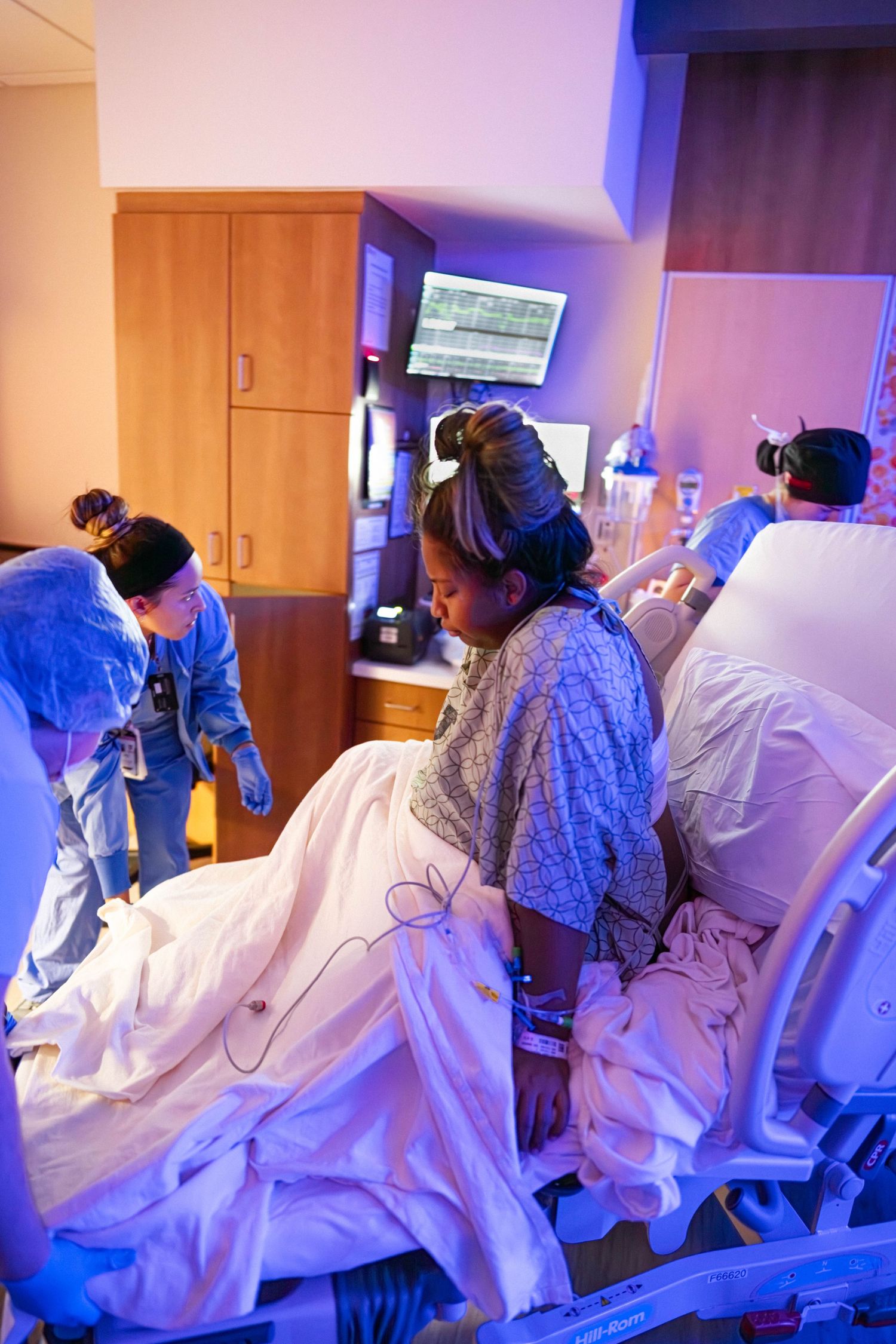
A major choice to make about your birth is where it takes place, and each of them has plenty of pros and cons to consider. What providers are available to you? What resources do they have? What is their scope of care? How is this setting going to make you feel based on your unique background and medical history? What do emergency situations look like? what pharmaceutical options are available to you for comfort? Ask yourself what things appeal to you.
Interventions, Risks, Benefits, & Alternatives
Continuous Fetal Monitoring
Continuous Electronic Fetal Monitoring (EFM)
What it is: Continuous tracking of baby’s heart rate and contractions.
Pros
Provides ongoing information about baby’s status
Standard in many hospitals with certain interventions
Cons
Restricts movement
Higher rates of intervention without clear improvement in outcomes for low-risk pregnancies
Possible Side Effects
Increased likelihood of cesarean or instrumental delivery
Alternatives
Intermittent auscultation (periodic monitoring)
Cervical ripening: Misoprostol, Cytotec, Cervidil
Why: These prostaglandin medications are frequently used to soften and open the cervix, typically before labor starts or in early induction.
Pros:
+ Can help avoid more invasive induction methods
+ Can speed up the first stage of labor
+ Can stimulate contractions
+ May be necessary if amniotic sac has ruptured
Cons:
- Can cause overly strong or frequent contractions, which may increase your chances of asking for pharmacological pain relief (epidural, fentanyl, nitrous)
- Requires continuous fetal monitoring in most hospital settings, and if they don't have waterproof wireless monitors available, you may be unable to labor in a shower/tub
Possible Side Effects:
- Excessive uterine contractions - they may feel like they're back-to-back without much of a break in between.
- Nausea, vomiting, fever (more common with misoprostol - ask them to check your temperature before administering to establish a baseline, they may suspect you're developing an infection and need antibiotics or pressure you to use other interventions to move labor along more quickly)
- Fetal distress with a faster or slower heart rate, increasing the risk of emergency c-section
Alternatives
- Membrane sweeping
- Penetrative sex
- Expectant management (waiting for labor if induction is not medically necessary and urgent)
- Mechanical dilation (Foley/Cook balloon, which are often painful and uncomfortable, and may cause back labor. They may be offered concurrently, warning label advises risks of placental abruption, uterine rupture, impaired placental circulation, fetal distress, AFE, and postpartum hemorrhage)
Foley or Cook Balloon
Why: When inducing labor, a balloon device connected to an inflation catheter is inserted into the cervix, and inflated to help dilate the cervix mechanically.
Pros
+ Comes out on its own when 4-5cm dilation has been achieved
+ Lower risk of overstimulating uterine contractions compared to meds
+ Can be used with or without medications
+ Fluid levels are manually adjusted, and may be lowered for your comfort
Cons:
- Can be uncomfortable or painful to place due to heightened cervical sensitivity
- May not start contractions on its own
Possible Side Effects:
- Cramping
- Mild bleeding
- Placental abruption
- Cervical laceration
- Rupture of the balloon may entangle it with the umbilical cord if membranes are ruptured, requiring emergency c-section
- Cord prolapse risk if baby is not engaged in pelvis
Alternatives:
- Cervical ripening medications
- Membrane sweep
- Waiting for spontaneous dilation if induction is not medically necessary
IV Fluids
Why: Childbirth is extraordinarily demanding on the body, and your body is consuming more water in response to the increased physical demands on your organs. Some moms also experience severe nausea and vomiting that can be difficult to control with oral remedies such as zofran on an empty stomach.The sudden change in blood/fluid volume in the body can make some mamas feel nauseous, may faint or be very lightheaded and dizzy, etc, A bag of IV fluids can often help mama feel much better by artificially increasing blood volume, and we have used them at the birth center as a temporary solution to be able to safely discharge her until she can rest at home. An IV allows your body to absorb fluids and medicines without additional strain on your stomach, and medications may be urgently necessary to address urgent complications, such as pitocin and tranexamic acid (TXA) for postpartum hemorrhage.
Pros
+ Prevents dehydration
+ Allows quick access for medications if needed
Cons
- Can limit mobility depending on setup, IV poles can be annoying to walk with
- May contribute to fluid retention
Possible Side Effects:
- Swelling in mother and baby
- Artificially increased birth weight may result in a perceived drop at the 24 hour newborn exam that exceeds safe <10% of birth weight
- Potential impact on breastfeeding (engorgement)
Alternatives
- Drinking fluids orally (may not be an option in hospital settings)
- No fluids administered, which may include many undesirable side effects of dehydration
Artificial Rupture of Membranes (AROM)
Why: The amniotic sac surrounding baby cushions the uterus and tends to keep contractions from being excruciatingly painful, and when it ruptures, it is often followed by increased intensity of contractions and faster cervical dilation and effacement, which may also be helpful if baby needs to be born urgently due to increased indicators of fetal distress.
Pros:
+ Can speed up labor
+ May strengthen contractions
+ May stimulate contractions for induction
+ Amniotic fluid can be a helpful early warning for possible infection or meconium due to abnormal scent and color, and can give an important alert to the birth team to have oxygen and resuscitation support ready immediately at birth
Cons
- Commits you to delivery (infection risk increases the longer your membranes have been ruptured)
- Can intensify contractions significantly
Possible Side Effects:
- Cord prolapse (rare but life threatening, requires immediate transport to hospital in knees-to-chest position with your provider holding baby's head away from the cord to protect their blood supply, likely an emergency c-section due to significant risk to baby's life)
- Infection risk if labor is prolonged
Alternatives:
- Waiting for spontaneous rupture
- Position changes and movement
- Stretch and sweep (may rupture)
Pitocin, AKA synthetic oxytocin
Why: Pitocin is an IV medication used to induce or speed up contractions and to promote postpartum contractions to staunch bleeding and expel clots or retained pieces of placenta. It can also be administered by an injection into your thigh by birth center and home birth midwives.
Pros:
+ Effective at starting or strengthening labor
+ Dosage can be refined to dial in an ideal intensity
+ Can assist the uterus to release your placenta and close blood vessels during a postpartum hemorrhage
+ Can be administered via IV if mama already needed lactated ringers or saline for dehydration, exhaustion, discomfort, etc.
Cons:
- Increased fetal monitoring is required, which correlates to increased c-section risk
- Often leads to additional interventions
- Associated with increased risks of postpartum depression
- Disrupts natural hormone balance
- Contraction intensity & frequency may be intolerable
Possible Side Effects:
- Fetal distress from strong contractions
- Increased likelihood of epidural use
- Increased risk of emergency c-section due to fetal distress
- Uterine hyperstimulation
Alternatives:
- Walking, standing, swaying, dancing
- Nipple stimulation
- Masturbation and orgasm
- Dark room, dim warm lights
- AROM (breaking your water)
- Rest and patience if mom & baby are not in distress
- Misoprostol (Postpartum Hemorrhage)
- Methergine (Postpartum Hemorrhage, not an option for preeclampsia or hypertension)
Fentanyl or IV opioids
Why: Fentanyl is a safe short-acting pain medication given through IV during labor. This can be a great option if you'd like an epidural but are hoping to delay it so you can dilate/progress, or if your anesthesiologist is unavailable.
Pros
+ Takes the edge off pain without full numbness
+ Doesn’t require a procedure like an epidural
+ Works quickly to manage pain
Cons
- Can cause drowsiness, confusion, slurred speech, nausea, vomiting, and/or disorientation
- Your body will quickly build a tolerance to it with each dose and it will wear off more quickly, but you can't have it more than once per hour and they can't increase your dose. The first dose might bring you relief for a full hour, the second might work for 45-50 minutes, the third might work for 20-45 minutes, and so on
- Generally only available before 5cm dilation, as it suppresses baby's natural instinct to take their first breaths, and they may not be as alert
Naturopathic Alternatives:
- Counterpressure
- Rebozo techniques
- Hydrotherapy
- Hot compresses
- TENS therapy
- Gate Control Theory
- Massage
- Hypnobirthing/Breathwork
Pharmacological Alternatives:
- Non-medicinal comfort techniques like counterpressure, rebozo, TENS, heat packs, water, etc
- Epidural anesthesia
- Nitrous oxide (if available)
Epidural Anesthesia
Why: An epidural is a regional anesthesia placed in the lower back to numb pain from contractions. After a numbing injection is given, a large needle is inserted into your spine to allow a flimsy catheter to deliver pain medications directly to your spine at your mid-back. If dad/partner is prone to fainting, he needs to be seated and not looking at the procedure tools and prep.
Pros:
+ Highly effective pain relief
+ Allows rest during long labors
+ If placed before an emergency c-section is needed, this is one less delay to operation, which may prevent you from needing to be put under general anesthesia
Cons:
- Generally you will be required to have a full bag of saline or lactated ringers (sugar water) via IV to ensure you are not dehydrated before the anesthesiologist will administer it
- May feel a zing/zap type of sensation through spinal cord all the way down to your hips or legs, which makes holding extremely still a difficult task
- Cannot walk, stand, or move lower body, which may be a deeply unsettling sensation, and makes position changes more difficult
- Requires catheter insertion to prevent urinary incontinence or retention
- Typically takes a few hours to wear off before you can stand unsupported
- Might feel relief on only one side, and may need to be positioned on the other side so gravity can help the medication to spread
- Some epidurals fail to work, and may not bring you much comfort or relief... there's a chance they may need to attempt to place it again
- May slow or completely stall labor
- Needle phobia may lead to vomiting, lightheadedness, fainting, etc if not looking away or mentally visualizing the procedure
- Significant or complete reduction in contraction intensity, frequency, and duration, which may require pitocin via IV
- Increased risk of a c-section delivery
- Drop in blood pressure which may make you nauseous
- Longer pushing stage and limited positions to push in
- Spinal headache (rare)
Naturopathic Alternatives:
- Counterpressure
- Rebozo techniques
- Hydrotherapy
- Hot compresses
- TENS therapy
- Gate Control Theory
- Massage
- Hypnobirthing/Breathwork
Pharmacological alternatives:
- IV medications like fentanyl
- Nitrous oxide
- General anesthesia for c-section
C-Section
Cesarean Birth (C-Section)
What it is: Surgical delivery of the baby through the abdomen.
Pros
Life-saving when complications arise
Planned option for certain medical conditions
Cons
Major surgery with longer recovery
Impacts future pregnancies
Possible Side Effects
Infection, bleeding
Longer hospital stay
Breathing issues for baby (sometimes)
Alternatives
Vaginal birth (when safe)
VBAC in future pregnancies (depending on circumstances)
EMERGENCY MANAGEMENT
Neonatal Resuscitation
About 10% of all babies will need a little bit of encouragement and stimulation to figure out this whole breathing-on-their-own thing. In many cases, this is as simple as rubbing baby with a warm towel, mom and dad talking to baby, bulb syringe suction to remove meconium, amniotic fluid, etc from the mouth, postural drainage (tilting your baby head-down to use gravity to assist in clearing blockages), and gentle stimulation like tickling their feet or spine. Most babies just need a minute, skin-to-skin with mama, the loving and reassuring voices of their parents, and gentle rubbing with a warm towel. Midwives in out-of-hospital birth settings tend to be a lot more patient than OBGYNs with delayed cord clamping when baby has low APGAR scores, and we can often leave the umbilical cord connected the entire time.
Advanced breathing assistance may be needed if initial breaths (mouth to mouth, bag-valve-mask, t-piece resuscitator) are not effective at stimulating baby to make respiratory effort, are not producing effective breaths with a visible rise and fall of the chest, and especially if their appearance is concerning (turning purple or blue, losing muscle tone and floppy/unresponsive, not alert, not making facial expressions, pulse is below 100bpm) and may include postural adjustments, CPAP, deep suction, a laryngeal mask, or in extreme circumstances, chest compressions or epinephrine administered through the umbilical vein.
Postpartum Hemorrhage
Postpartum hemorrhage is when 1000cc or more of blood is lost before bleeding is controlled. The most common treatment for postpartum hemorrhage is Pitocin, which is associated with increased rates of postpartum depression. In some countries, pitocin is often paired with tranexamic acid (TXA) to increase the efficacy of pitocin and reduce blood loss for high risk moms.
Alternatives:
- breastfeeding and nipple stimulation
- misoprostol (may cause fever, vomiting, shivering)
- methergine may be given as second-line treatment, but is not advised for pre-eclampsia or hypertension due to stroke risk
Urgent Postpartum Hemorrhage
In the event that the above common front-line treatments for postpartum hemorrhage (>1000cc blood loss) aren't effective, more intense interventions may be necessary to control bleeding and prevent death when blood loss is persistent and heavy. These interventions are quite painful, but thankfully it's pretty rare that these methods are needed. I've only seen these used when mama's blood loss is very rapid and substantial in volume, and we can tell it wouldn't be prudent to wait 5-10 minutes for those methods to take effect.
Common causes:
- Uterine atony (exhausted muscles cannot clamp down, typically after extended 2nd stage of birth)
- Retained placenta/amniotic sac
- Placental abruption (partial separation from uterine wall, leaving blood vessels open)
- Clotting disorders
Treatment options include:
- Bimanual compression - your provider will insert their hand inside of your vagina, and close their hand into a fist. Their other hand will simultaneously compress the uterus from the outside, applying pressure to the uterine wall
- Manual retrieval of retained placenta (excruciatingly painful due to size of open wound inside uterus and heightened cervical sensitivity)
- Urgent emergency transfer to hospital for blood transfusion and possible emergency hysterectomy, bimanual compression is ongoing during transfer
- JADA device - basically vacuums the uterus shut, applying vacuum pressure to the uterine wall
- Bakri balloon - A balloon is inserted inside of the uterus and inflated with saline or sterile water, to apply pressure to the uterine wall, like a larger capacity foley balloon.
- If all other methods fail, an emergency hysterectomy may be necessary to save your life.
Episiotomy
This procedure is still performed way too frequently, mostly in hospital settings with impatient and skittish providers. For a long time, many OBGYNs cut episiotomies on every mama without medical necessity. Hospital providers still perform them on a fairly regular basis, while out-of-hospital providers might only cut a few in their entire career - ask your provider about their episiotomy rate in your consultation or leading up to your birth, and discuss alternatives and preferences. It is not uncommon for providers to perform an episiotomy without maternal consent, which is obstetric violence that should be reported to state licensing boards.
Pros:
+ If baby is in urgent distress, with a heart rate that is excessively high or excessively low, or their heart rate appears to be losing variability, they need to be born ASAP and an episiotomy may expedite their birth
+ Delays in delivering a baby in distress may result in permanent injury, disability, and/or death
+ May be necessary for forceps or vacuum assisted delivery in urgent fetal distress situations
+ May give your provider more room to perform shoulder dystocia maneuvers by giving them more room to reach around baby to dislodge their shoulders from your pubic bone
Cons:
- Tissues heal better when the tear is jagged, providing more overlapping surface area and forming a stronger scar
- Extremely painful if you're unmedicated
- Prolonged recovery time and significant postpartum pain that may necessitate bed rest
- May lead to more severe 3rd and 4th degree tears
- Possible fecal and urinary incontinence
- May necessitate pelvic floor physical therapy to heal properly
- May result in painful penetrative intercourse
- Nerve damage may be permanent
Alternatives:
- Allowing the body to tear naturally
- Making a smaller surface level cut to encourage natural tearing to begin
- C-section (may be a stat/crash c-section)
- No episiotomy... which may increase risks of neonatal resuscitation, severe injuries, permanent disabilities, and even fetal death.
Vacuum Extraction
Why: Sometimes we really gotta get baby out right now due to fetal distress if a spike in their heart rate suggests baby may be about to crash, which may result in an urgent and traumatic crash c-section. A suction device is applied to baby’s head to assist delivery during pushing. If the provider is having a hard time placing the device, an episiotomy may be beneficial or necessary.
Pros:
+ Can help avoid c-sections
+ Useful when birth needs to be urgently expedited
Cons: -
- Requires specific positioning and conditions
- Not always successful
- May require episiotomy, which will prolong postpartum healing and is quite painful
- Scalp swelling or bruising on baby that may necessitate Vitamin K to prevent life threatening bleeding, disability, and death
- Minor tears for the birthing person
Alternatives:
- Forceps
- Continued pushing (if safe)
- Vertical postural positions on birth stool to maximize gravity
- C-section
Forceps Extraction
Why: If baby is experiencing urgent fetal distress and signs of imminent crashing, forceps are like a large curved set of metal kitchen tongs designed to grab baby's head and rotate/pull their body out. A new design was just proposed that may decrease the associated risks, but it's unclear if or when it will be widely distributed to hospitals to replace the outdated design.
Pros:
+ Can be very effective in skilled hands
+ May avoid c-section birth
Cons:
- Requires expertise
- Can feel more invasive
Possible Side Effects:
- Vaginal or perineal trauma
- May require episiotomy
- Marks and injuries to baby's face and head (generally temporary)
Alternatives
- Vacuum extraction
- C-section birth
Umbilical Cord Prolapse
Why: Sometimes when the amniotic sac has ruptured before baby is thoroughly engaged in the pelvis, the umbilical cord can come through the cervix and fall into the vaginal canal. The umbilical cord is cushioned with Wharton's Jelly and is designed to withstand compression without compromising baby's blood supply... but a cord prolapse is a life threatening and extremely urgent emergency as the head compressing the cord can quickly cut off baby's blood supply.
Management:
- Immediately place mama in knees-chest position so gravity helps baby relieve any pressure on the umbilical cord
- Provider inserts hand to literally push baby's head off the cord to give it more room
- EMS immediately called for out-of-hospital births and transfer is expedited, in-hospital emergency response teams paged
- Crash c-sections are generally performed, mama is placed under general anesthesia if she doesn't already have an epidural, so they can operate within 10-20 minutes to save baby's life.
- Vacuum or forceps delivery if birth is imminent & faster than c-section response time
Placental abruption
Why: Sometimes the placenta may partially or fully detach before baby is born. Mama may begin to bleed, and/or fetal heart patterns may be erratic, The urgency of an abruption depends on the severity of the bleeding, baby's gestational age, whether the bleed stabilizes and stops or is ongoing, etc. In mild cases where the bleed stabilizes, mama may be closely monitored in the hospital until she delivers.
Risk factors: preeclampsia, hypertension, gestational diabetes mellitus, chorioamnionitis (an infection in the amniotic fluid), and smoking cigarettes (especially during pregnancy), cocaine and drug use, and intimate partner violence (source: AJOG)
If baby's vitals are stable, vaginal birth is the preferred birth method with favorable outcomes for baby's survival and mama's blood loss, but an emergency c-section may be necessary if baby begins showing signs of fetal distress.